When Cancer Changed My Future
Cancer & Infertility

The Little Pamphlet
I was just diagnosed with a rare, aggressive cancer that was already metastasizing. The nurses were staging my first bag of chemotherapy, its red contents ready to be slowly pumped into the port in my chest, into my heart, and distributed throughout my body. Later that day, the doctors had scheduled an operation to inject chemotherapy into my spine to prevent the cancer from spreading to my brain. It seemed like my entire body was infected or at risk of this cancer.
One of the nurses on my care team came in and handed me a small pamphlet folded in three parts. She spent the next ten minutes walking me through my case and what the chemotherapy was going to do to my body. How it targets specific cells, how it kills them, and how this affects male and female fertility.
The drugs had a high likelihood of causing temporary and sometimes permanent infertility, impacting sperm production, quality, motility, and causing damage on the DNA level.
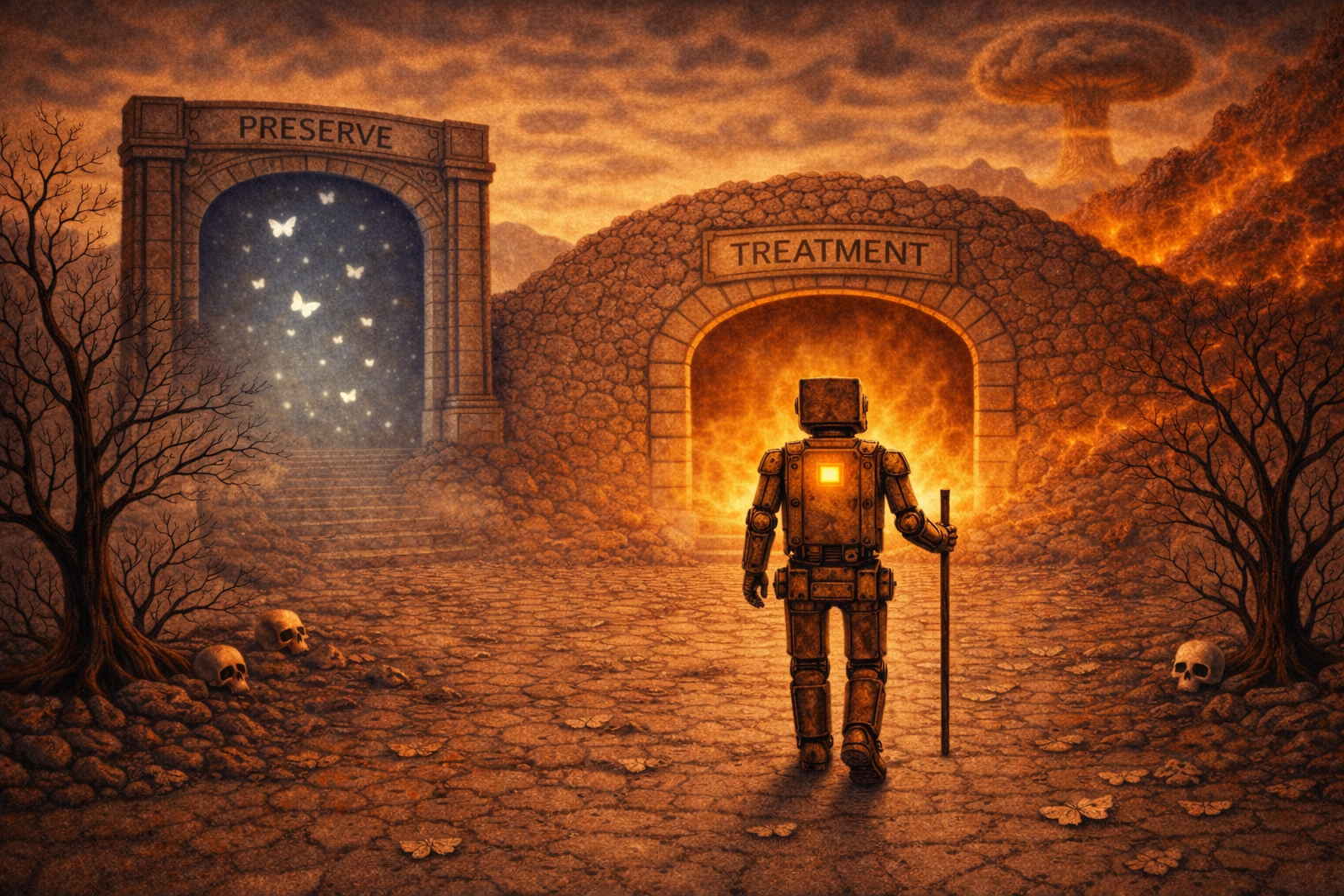
Because of the severity of my case and the need to start chemotherapy right away, I would need to make the decision within the next hour. If I wanted, I could enroll in UCLA’s Oncofertility program, which offered cryopreservation or sperm banking for young cancer patients, at a cost. The benefits are that if I plan on having a family someday, I could use this sperm in the future.
The nurse said she would give me some time and stepped out of the room.
I remember pausing and looking out of the hospital window, not at anything in particular. My mind was spinning. I have a habit of laughing at inappropriate moments, during serious conversations, funerals, and when people are crying. It's a nervous reflex, a coping mechanism for moments when I don't know what to do or say.
This moment was no exception, and I chuckled out loud and shook my head. This was crazy.
Relationships & Family
Over the years, I'd had different views on life, my future, and family. I had friends who couldn't wait to start a family. It was their ultimate goal. Early on, they bounced from relationship to relationship, chasing a checklist till they found the “right” partner, and then everything followed: moving in together, getting engaged, marriage, and planning for the family they would build, etc. Some planned on having two kids, some on more, the common joke was “more than two kids?! In this economy?!”
That had never been my mindset.
I wanted a life partner, but I didn’t want a big family early on. I was focused on my career, and I wanted financial stability first.
In my early twenties, when my dates would inevitably ask about my family plans, I would say I was focused on my career and not looking to start a family. I could see the shift immediately, the interest fading, the energy changing. Once, a young lady was visibly frustrated and asked why I didn't want a family now. When I explained my reasoning, she called me immature, juvenile, and selfish.
But I’d grown up in a family of five kids. My parents, for various reasons, hadn't focused on financial stability. There were periods when food was tight, and life and educational opportunities were limited, and my own future felt constrained by limited resources despite my capabilities. I often wondered why people chose to have children without first building an environment that gives those kids the best chance to succeed, especially in a world where one degree isn't enough, and the American Dream feels increasingly unreachable.
I’m not saying it's impossible to raise kids successfully without everything. But rarely in my discussions about kids was there real thoughtfulness about how people intend to provide for the children; it was more about the romanticized ideas of what kids or a family provide in terms of purpose or feelings.
I promised myself that if I ever had a family, it would be intentional. Thoughtful. Planned. My partner would need to want kids for the right reasons as well.
As I got older and more established, I began to see the future more clearly. A family started feeling possible. Real with the right partner. And now the nurse was telling me to choose between having kids someday and not having them. To freeze my sperm to give myself only a slim chance?
I was frustrated. Sad. In disbelief. Here I was, finally feeling comfortable with the idea of a family, after all the hard work, and this cancer was taking it away from me. It felt unfair. Not having the choice anymore made the idea of not having kids much harder to swallow.
The Decision
I was lying in a hospital bed, hooked up to oxygen, being told that if I don't start chemotherapy right away, this cancer is going to kill me; it already was.
Not long before, I’d read an article about epigenetics and the role male health plays in a baby’s health and development, not just during pregnancy but throughout their life. Age, lifestyle, diet, alcohol consumption, and smoking, all of it, could affect sperm at the DNA and microRNA level, influencing metabolic health, neurodevelopmental, and disease risk. The study highlighted that male sperm health plays a more significant role than we ever thought.
So what about my sperm? I’d been dealing with autoimmune issues after getting COVID. Long COVID had turned into a disability and had significantly affected my life. Was my DNA damaged? Would cancer mutate them further? Would I be passing on risk, disease, and suffering to a future child?
When I asked the doctors and nurses about my case specifically, they couldn't answer with certainty. There weren't enough studies. Too many unknowns. My case was severe and unique.
What was the point in saving cells that I couldn't trust weren't damaged? No matter how much I argued both sides, I continued to come back to the rationale that I couldn't justify preserving something that might hurt the mother or an innocent child. I didn't see my sperm as viable, strong, or healthy. How could I?
So I made the decision to start the treatment without saving my sperm. In the back of my head, I wondered if this was the right decision.
The Path Forward
When the nurse came back, I told her to go ahead and start the chemotherapy. I would not be saving my sperm. She asked if I was sure. I nodded, forced a smile, and said, "Yes."
As the pump started, there was a lump in my throat. I knew what this decision meant for my future. How would dating conversations change once I disclosed this information.
As treatment went on, I watched what chemotherapy and other treatments did to my body. I stopped growing hair. My skin peeled and fell off. My sexual drive disappeared. My energy, my aggression, my drive, became muted. Arousal dampened, and testosterone levels became dangerously low. I was surprised at how much my body was changing. I worried I wasn't the man I used to be anymore.
To prove myself wrong, I went on a date with someone whom I had once dated years before I’d gotten sick. I wanted to test my confidence and reaction with the opposite sex. I tried to present strength, confidence, and masculinity that used to come so easily. When I shared my condition, the energy shifted. Where there had been flirtation and sexual energy before, now there was empathy and a neutral, friendly energy and interaction.
At the end of the date, there was no lingering touch or desire for future entanglement. Just a handshake, a friendly smile, and “let's keep in touch.” The follow-up texting went from flirtatious sexting to being too busy to reply.
While I'm sure it wasn't intentional, I can take a hint. I felt embarrassed for myself. For putting myself in that situation. For hoping to be proven wrong, only to be proven right. I don’t fault anyone for not wanting to be with someone who has been damaged and complicated by sickness and cancer.
I can only hope that after this is all done. Once I beat this cancer for good. Once my body repairs and heals. My cells will do the same.
There are days that I look at myself in the mirror and feel less than a full man because I know my body is either not producing sperm or not producing healthy, viable cells. I know that when I'm ready to start a relationship, I'll have to be open and disclose the details of my life and what that means for a future family. Maybe that'll mean exploring other options like IVF, sperm donors, or adoption.
I talk myself out of those negative thoughts that make me feel like I don't deserve the same happiness anymore or that I don't have the qualities to be a good partner. I know I deserve happiness.
I remind myself that cancer narrowed the options, and I made the most rational decision available with the information I had.
Written By Josh Parra
Cancer Fighter, Writer, Advocate
