Cancer & Diagnosis
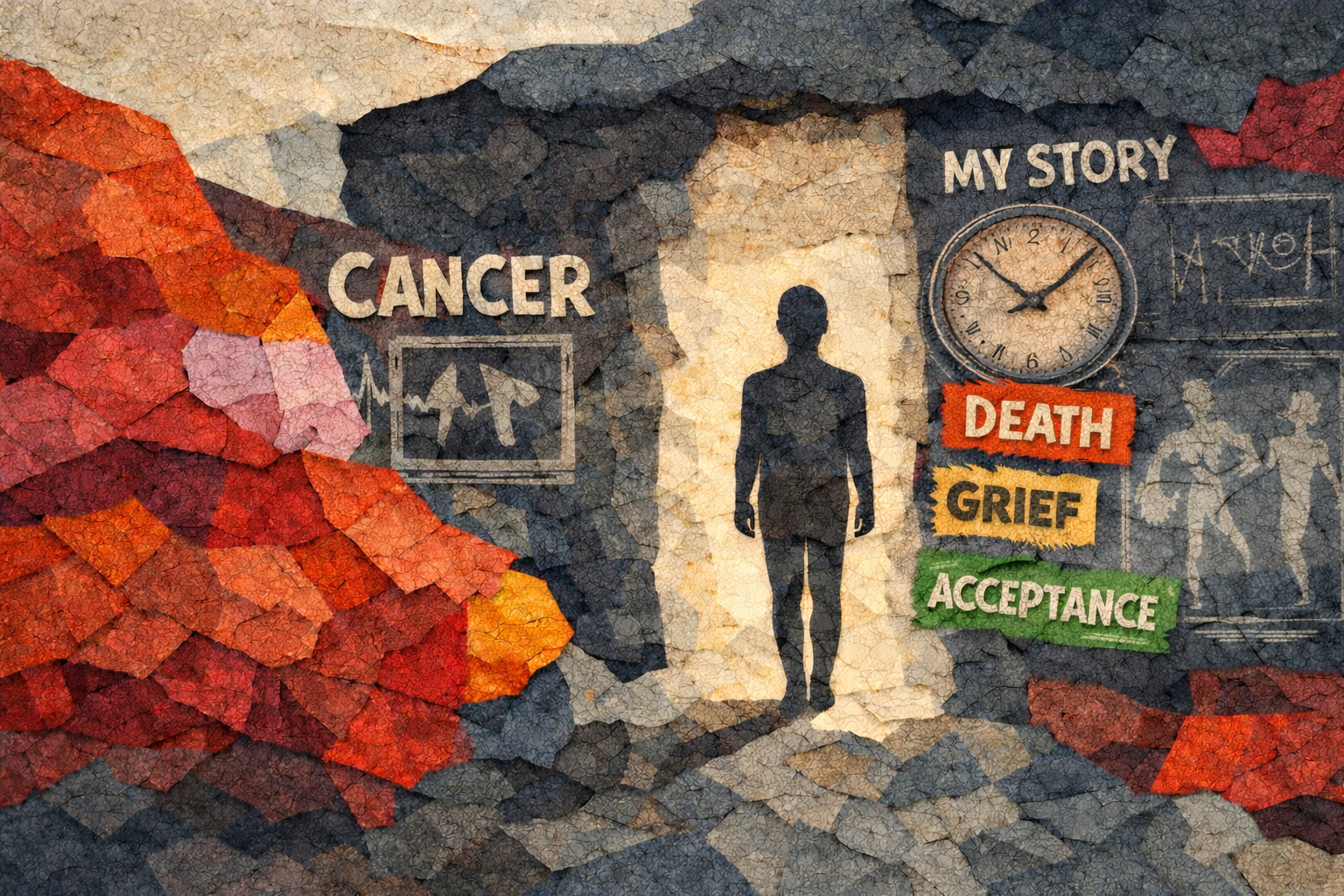
The Moment
May 2023: I had been waiting for this moment.
The last two years had been hell.
Doctors told me it was all in my head. Doctors told me I was having drug withdrawals. Doctors told me I was faking it to get attention. Doctors prescribed me medication that never worked.
Ever since getting COVID in 2021, my body hadn't recovered. They called it Long COVID, but that only seemed to explain some of my symptoms. The autoimmune issues were extensive and severe, but what made my case different was the loss of mobility, requiring the use of a wheelchair and walker, and loss of speech, diagnosed with ataxic dysarthria, and using speech adaptive devices, along with neurological issues that affected my cognitive abilities. I struggled to get care.
I went to specialty care physicians, neurologists, rheumatologists, Long COVID clinics, participated in clinical trials, spent months in speech therapy, multi-year physical therapy, and mobility training, my parents' house was changed and adapted to accommodate my mobility issues, I was given an at-home caregiver to assist with daily activities, anything to get help. Little progress was made. The symptoms never getting better. My body never healing.
The weeks leading up to this moment, I’d been to the ER several times. My heart was hurting. The slightest movement would feel like someone squeezing my heart. They did testing. Took X-rays, said I wasnt having a heart attack, and it was anxiety, and sent me home. A week later, on top of everything else, I had Pneumonia, was having trouble breathing, and coughing up blood, amongst other symptoms.
Back at the ER, they took a deeper look at my lungs, concerned about the breathing issues, only to find a mass growing in the center of my chest, pushing into the space where my lungs and heart reside. The reason for my breathing and heart pain.
After a biopsy, the results were in, and I was diagnosed with late-stage cancer. a rare subtype of non-Hodgkin lymphoma. It was slowly killing me.
I was admitted to the hospital ICU. The first moment I had alone, I cried. But I wasnt sad. I had just been given a real diagnosis. For once, there was a clear understanding of what was wrong; there were doctors who specialized in treating this cancer. There were studies and trials exploring new treatment options for this cancer. It didn't matter that they told me it was killing me. We weren't fighting a ghost, this feeling was greater than my fears, apparently, because the main feeling was relief, despite the other emotions floating around.
The doctors would later tell me that if I had never gotten COVID, I would not gotten this Cancer. COVID had caused significant damage to my immune system, which allowed the cancer the right environment to grow. The dysfunction I’d been struggling through, my own body damaging itself as it tried unsuccessfully to fight this aggressive cancer.
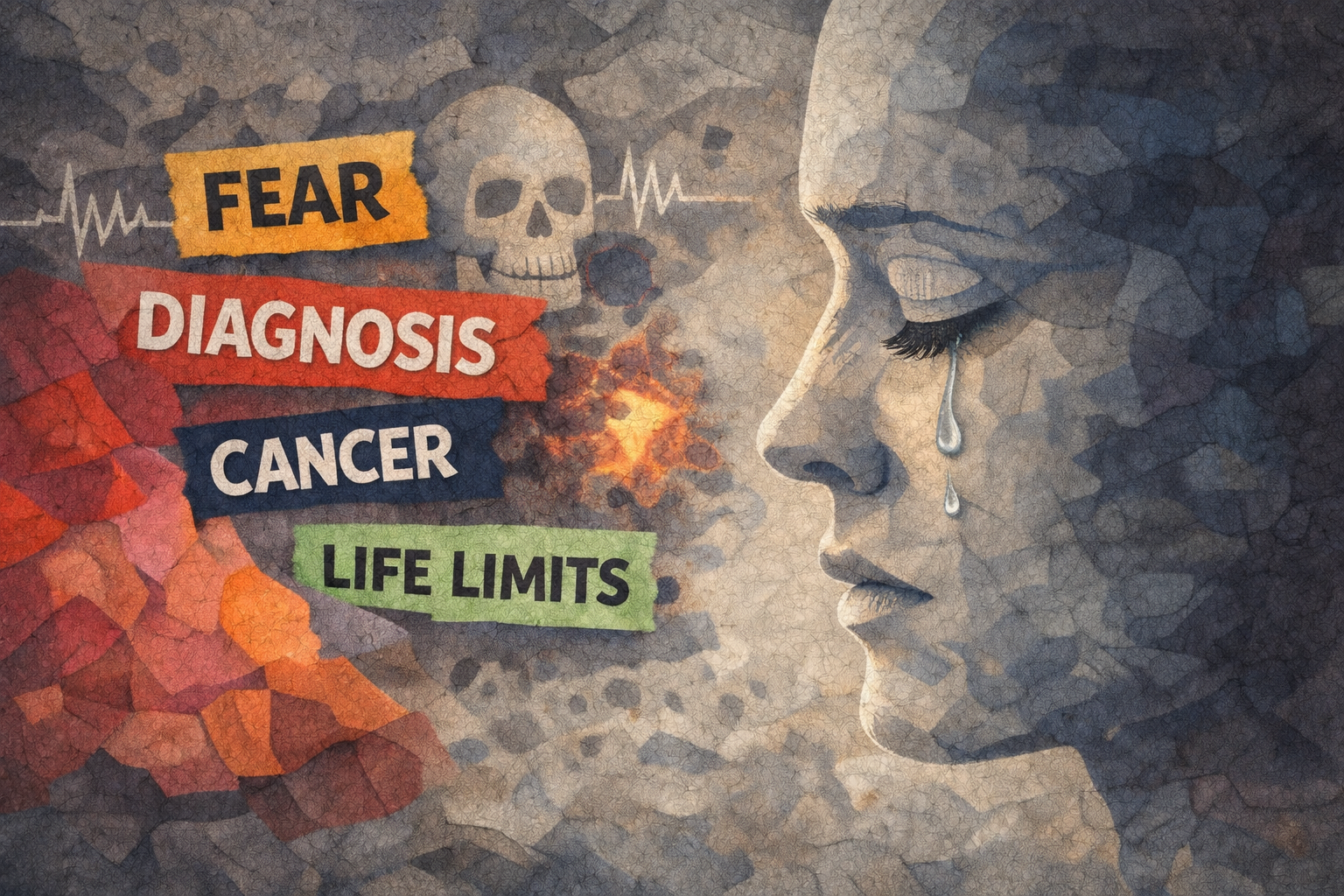
Facing Your Diagnosis
Being told you have late-stage cancer and that it's actively killing you is weird.
I see it on the MRI and PET scan results. The doctors can point it out, measure it, show the effects of it, show you the blood results, bio markers, everything inside of you that tells you this is cancer. But it's not something so physical that you can walk up to it, shake its hand, and introduce yourself. It's a stranger. An invader. An unwelcomed visitor. Who invited this guy?!
And so there is a struggle within yourself to wrap your head around everything. Why did my cells do this? Why didn't my body do what it's supposed to do? Why isnt it fighting more? If I am my body, and my body is me, then why is there something growing inside me that I don't want? It conflicts with everything you believe about who you are and what you are in control of.
It can make you feel like there's something wrong with you, or that it validates a pre-existing feeling or idea that there's always been something wrong with you. That you struggled because there was always something messed up.
There were moments when I struggled with feelings that I hadnt done enough. That somehow this was my fault. That I could have dieted better, been more physically fit, done more checkups with my doctor, you begin to connect areas you felt were your weakest points as potential failure points, no matter how illogical they might seem. Was this because I didn't like going to the dentist? All as a way to make sense of what's occurring to you. To find some rationale as to why this is happening to you. It can't just be bad luck; it can't just be genetics or damaged cells or DNA. It has to be because of something I had control over. But that wasnt the case.
Stages Of Grief
The most normal thing you could do throughout this whole process is to feel what you're feeling. To fight or deny your experience, avoid reality, or ignore the truth will only hurt you.
We each have a way of dealing with traumatic situations, and there are natural ways we adapt to these stresses to help us through them. But if we pull away one of the pieces of the puzzle and hide it, we can then lose sight of the bigger picture and struggle to connect the rest of the pieces together.
Over the years, going through sickness with COVID, Long COVID, disability, and adjusting to a life working through autoimmune issues, cognitive issues, and cancer, I've had ups and downs. Through many failed attempts to navigate these moments, I've done things or had thoughts that werent healthy, and it's resulted in more struggling or being stuck in unproductive thoughts or actions.
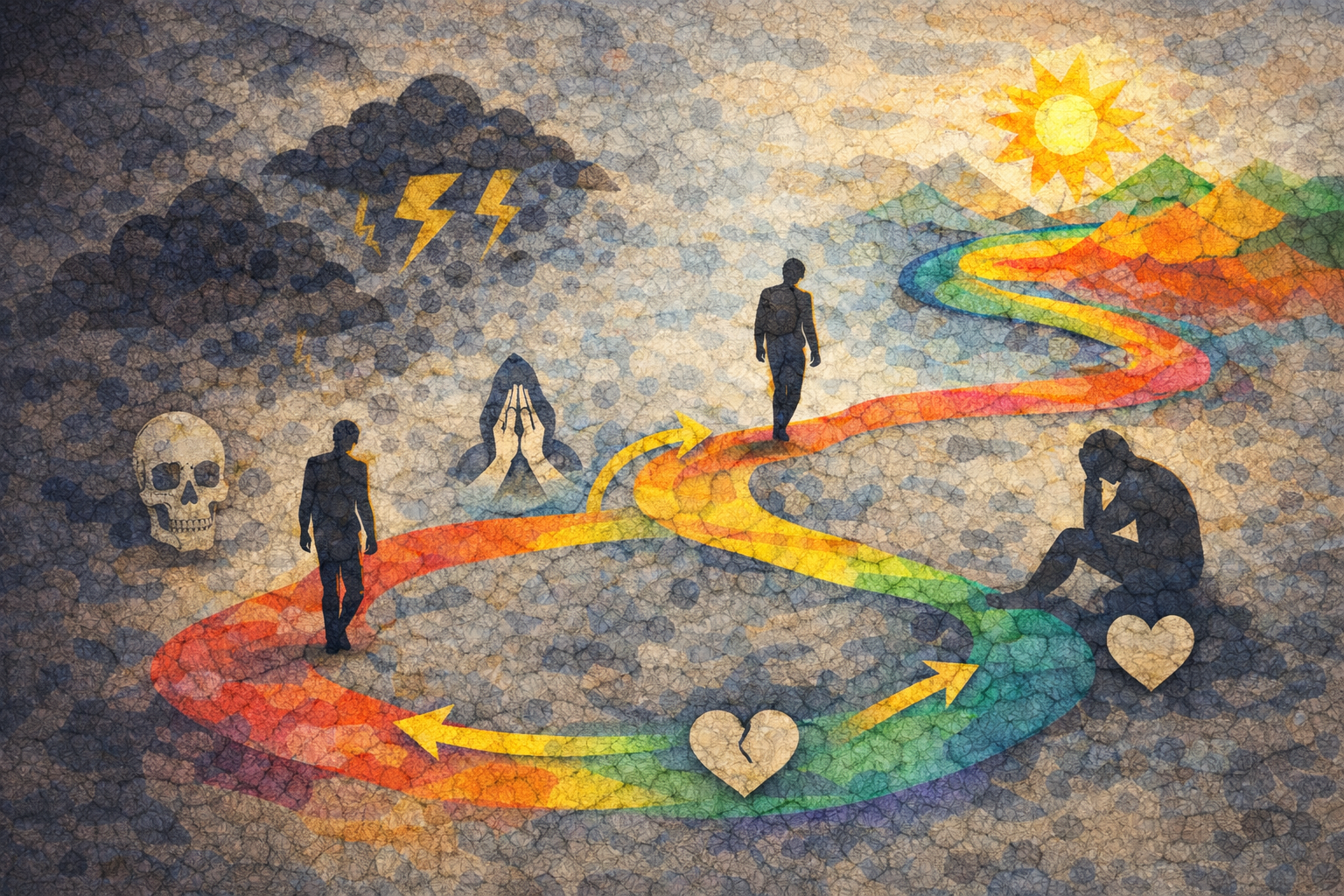
In trying to understand what I was going through, I read about American psychiatrist Elisabeth Kubler-Ross, who observed that humans go through cycles of grief and emotions when dealing with emotional trauma, death, and dying, which include denial, anger, bargaining, depression, and acceptance. Kubler believes that humans can experience these emotions in any order and that we can experience multiple stages simultaneously. Stages can be skipped, and just because you've gone through a stage doesn't mean it can't be revisited. It's a non-linear journey through grief. Coming to terms with your situation and understanding it and yourself better.
It's important to remind ourselves that what we are going through and feeling is perfectly normal and that our brains need to go through these stages to help us get to the next phase, whatever that is. It's the most healthy and helpful thing we can do for ourselves.
That can be hardest when everyone tells us there needs to be absolute positivity—no negative thoughts. No realism. The only way to get through this hardship is to believe. Have faith. Believe in the impossible. And while that might be where they're at in their grief process, you don't have to forsake your own process in support of theirs. I've had to learn to be disciplined and intentional, communicating and appreciating where others are coming from,m but being firm in “this is where I'm at” and “this is what I'm feeling” and calling for others to truly support and respect where you're at and how you're feeling. Prioritizing and selfishly putting yourself first. As you fight against death, this is your strongest defense and offense.
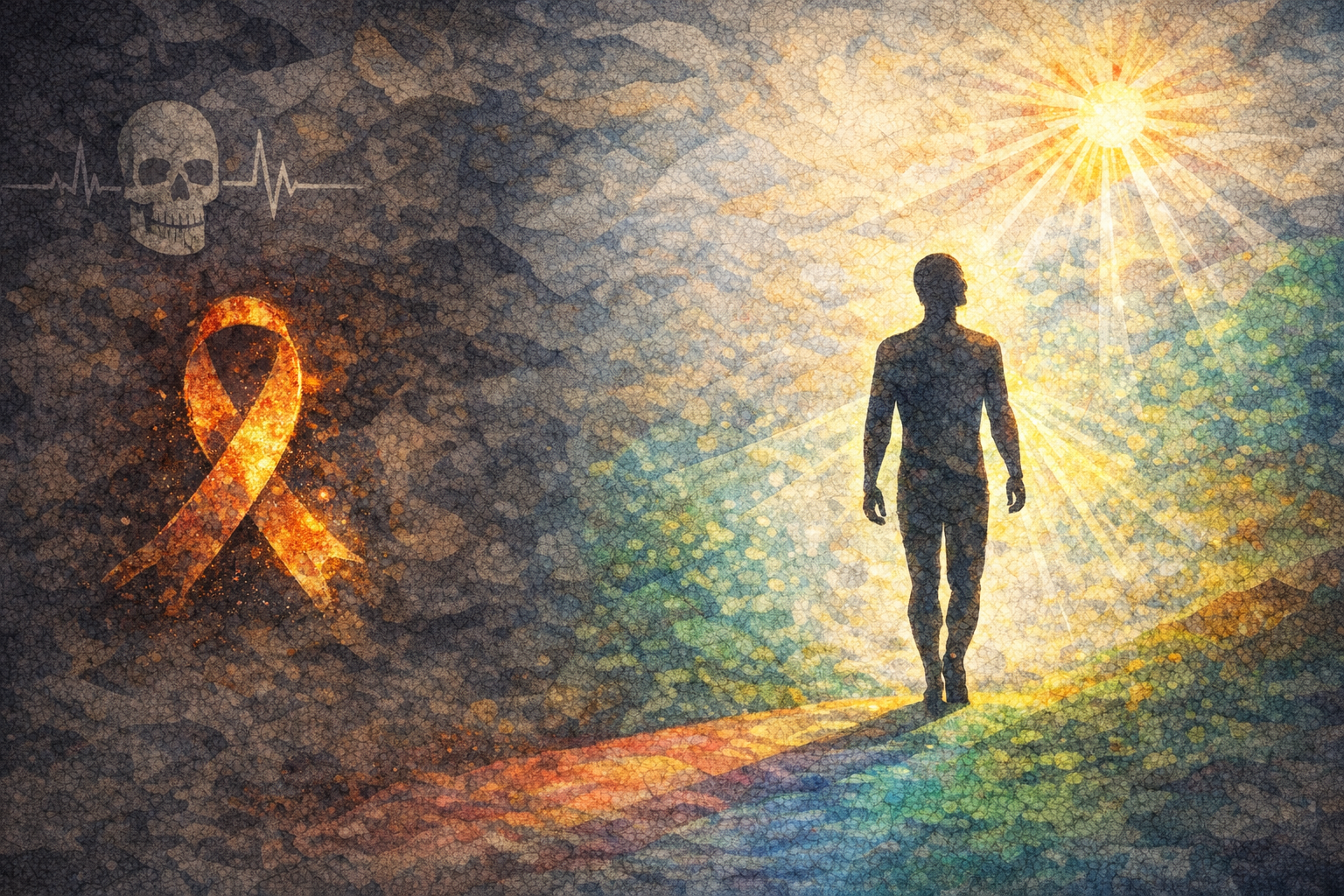
Facing Cancer & Death
Dying is not like anything I ever imagined it would be. It wasnt this dramatic, overly emotional event.
While I knew things were serious, it didn't match what I thought death would look like. It was all so calm. Even the people around me were calm. Yes, they looked sad. But everyone was putting on such a brave face. Telling me things like “You got this,” “You're such a fighter,” and “We’re going to get through this,” and while they were lovely sentiments, they felt benign or shallow. It's not that they didn't mean anything to me. Of course, I was going to fight, stay positive, be strong, etc., but it felt so out of my control. I couldnt wish these cancer cells away. These well-wishes sure weren't fixing my body or helping me fight this cancer. But what more could they say?
I was more frustrated. I wanted to do more to fix this. I wasnt ready to come to terms with my mortality. I wasnt prepared to face the fact that if this treatment didn't work, I would continue to get worse, my lungs would collapse, my heart would fail. I would die. I wanted more time. Time to fix this.
When I did have moments of sadness, it wasn't a pity party. I wasn’t sad for myself per se. I found myself sad about what I would be missing. Talking to my family and friends, I’d start tearing up, emotion filling my chest as I watched them smile, laugh, and talk.
My brain would become the observer, viewing everything in third person, making the mental note that this could be the last time I saw them like this, enjoy their humor, feel their hand in mine, share stories, etc., and what about the future? I wouldnt be able to share those future life moments with them. I’d miss being proud of them when they accomplished something, happy for them, and sad and hurt when they were. Thinking in those terms hurt more than my own thoughts of not being able to see or do or X thing for myself.
Facing your diagnosis and death won't give you time to grieve properly, to process what's happening, or make sense of everything that has occurred. Diagnosis is a threshold, a starting point into a world that, once you cross it, will forever change you. Time will stop feeling abstract, and your future will feel personal and demand conditions.
I still don't feel like I have figured it all out or that my life is balanced or returned to normalcy now that I'm in remission again. Going through cancer is like learning a language you never wanted to learn. That information will always be with you, forcing you to walk differently. The goal is not to let it change you, harden you, shrink you, or overwrite who you are, but to protect and maintain what is still good, true, and worth living for in you and in this life.
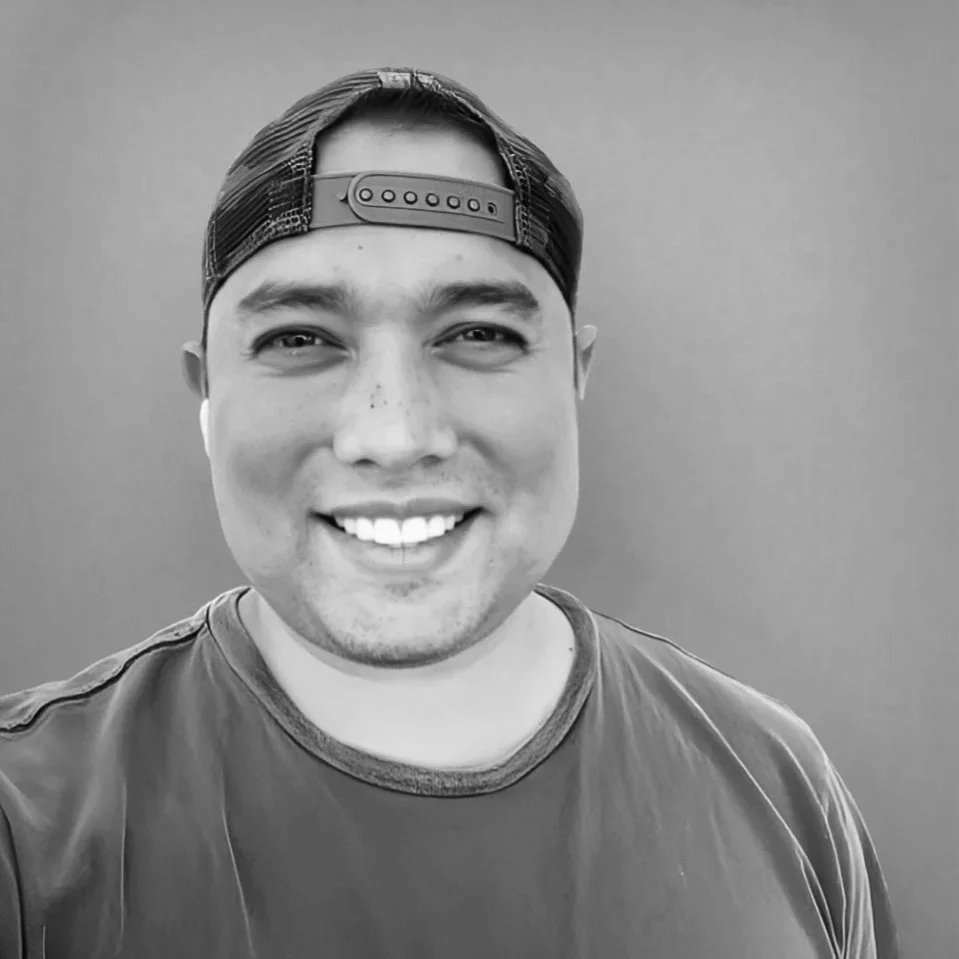
Written By Josh Parra
Cancer Survivor, Writer, Advocate
